Canada Toxic Substances Regulation: Key Compliance Update
Canada Strengthens Environmental Compliance Framework
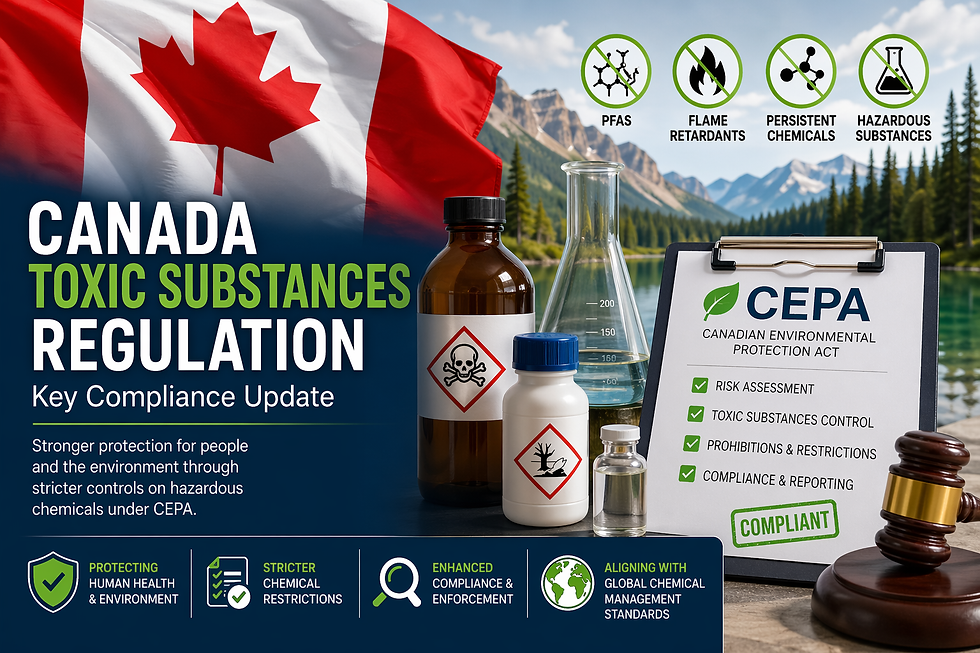
The Government of Canada has reinforced its environmental protection strategy through updates to the Prohibition of Certain Toxic Substances Regulations under the Canadian Environmental Protection Act (CEPA). This regulatory framework, administered by Environment and Climate Change Canada in collaboration with Health Canada, aims to reduce the risks posed by hazardous chemicals to both human health and the environment.
Canada Toxic Substances Regulation: Key Changes and Scope
The Canada toxic substances regulation focuses on restricting or prohibiting substances identified as harmful due to their persistence, bioaccumulation, and toxicity. These updates align Canada with international environmental agreements and reinforce stricter chemical management practices.
Key aspects include:
Expansion of restricted or prohibited substances
Increased scrutiny on industrial chemical usage
Alignment with global conventions such as the Stockholm Convention
Strengthened enforcement and compliance obligations
Substances commonly affected include flame retardants, perfluorinated compounds (PFAS), and other industrial chemicals flagged through risk assessments.
Regulatory Requirements
Prohibition Measures
Manufacturers, importers, and distributors are prohibited from:
Manufacturing listed toxic substances
Using these substances in production
Selling or importing products containing restricted chemicals
Exemptions
Limited exemptions may apply for:
Essential or critical applications
Specific industries with transitional allowances
Compliance Obligations
Companies must:
Maintain detailed documentation
Ensure supply chain transparency
Submit reports when required
Demonstrate conformity during inspections
What This Means for Manufacturers
The regulation has significant implications across multiple industries, including electronics, automotive, and chemical manufacturing. Businesses must:
Reformulate products to eliminate restricted substances
Strengthen supplier communication and verification processes
Conduct chemical testing and compliance assessments
Monitor regulatory updates to avoid disruptions
Certification and Market Impact
Although not a certification scheme, the Canada toxic substances regulation directly impacts:
Product compliance documentation
Material declarations and safety data sheets
Market access eligibility in Canada
Non-compliance may result in penalties, product recalls, or import restrictions.
Timeline and Implementation
Updates to the regulation are typically published through the Canada Gazette, the official channel for regulatory announcements in Canada. Implementation timelines may vary depending on the substance, with some bans enforced immediately and others phased in over time.
Recommended Actions
To ensure compliance with the Canada toxic substances regulation, companies should:
Review product materials and Bill of Materials (BOM)
Conduct internal chemical compliance audits
Engage suppliers for material disclosures
Track regulatory updates from Canadian authorities
Develop substitution strategies for restricted substances
