USA FCC C-V2X 5.9 GHz Transition: Key Regulatory Changes for ITS Spectrum
The FCC C-V2X 5.9 GHz transition marks a significant shift in U.S. spectrum policy for intelligent transportation systems (ITS). The Federal Communications Commission (FCC) has restructured the 5.9 GHz band to improve spectrum efficiency, accelerate connected vehicle technologies, and enable broader wireless innovation.
Overview of the FCC C-V2X 5.9 GHz Transition
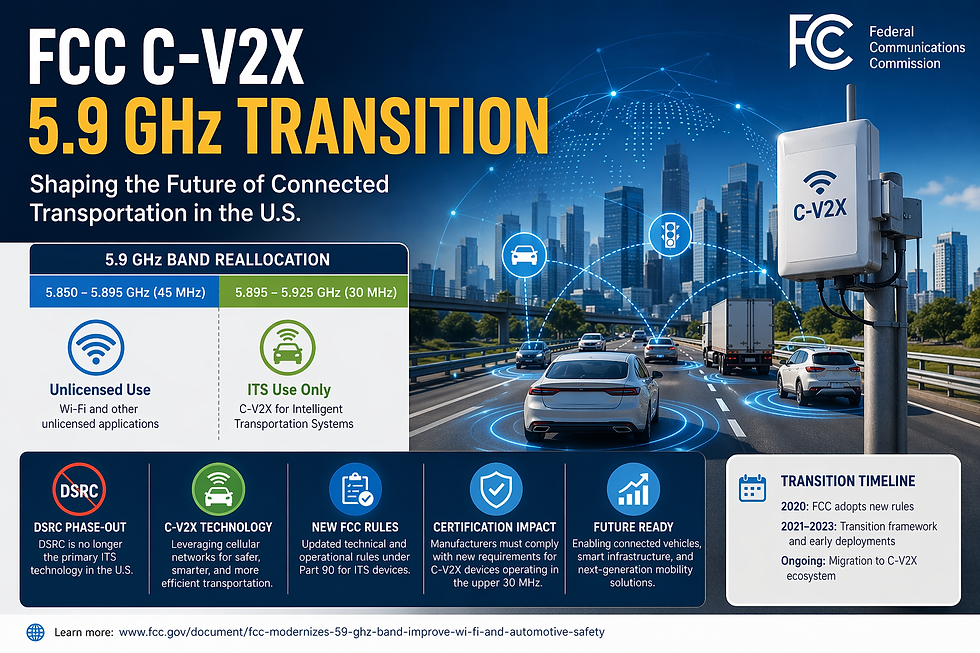
The FCC C-V2X 5.9 GHz transition redefines how the 5.850–5.925 GHz band is used in the United States:
5.850–5.895 GHz (45 MHz): Reallocated for unlicensed use, including Wi-Fi technologies
5.895–5.925 GHz (30 MHz): Reserved for ITS applications using C-V2X technology
This change replaces the legacy Dedicated Short-Range Communications (DSRC) framework with a more advanced and scalable solution.
Why the FCC Transitioned from DSRC to C-V2X
The FCC determined that DSRC adoption was limited and that newer technologies could better support modern transportation needs. C-V2X (Cellular Vehicle-to-Everything) offers:
Improved reliability and range
Integration with LTE and 5G networks
Support for vehicle-to-vehicle, infrastructure, network, and pedestrian communications
Enhanced scalability for future smart mobility ecosystems
Technical and Regulatory Framework
Under the new rules established by the FCC:
ITS operations must comply with updated technical requirements within the 5.895–5.925 GHz band
Devices must meet FCC equipment authorization procedures under Part 2 and Part 90 rules
Spectrum sharing and interference mitigation requirements are enforced to ensure coexistence
Manufacturers must align product development with these updated standards to maintain compliance.
Impact on Manufacturers and Industry
The FCC C-V2X 5.9 GHz transition has direct implications for multiple sectors:
Automotive Industry
Accelerates deployment of connected and autonomous vehicles
Supports advanced safety applications and real-time communication systems
Telecommunications Sector
Enables integration with 5G infrastructure
Expands opportunities for smart city deployments
Wireless Ecosystem
Provides additional spectrum for unlicensed technologies such as Wi-Fi
Improves network performance and reduces congestion
Certification Impact Summary
Technology Shift: DSRC is being phased out in favor of C-V2X
Spectrum Availability: Reduced ITS allocation (30 MHz)
Compliance Requirements: Updated FCC rules and certification procedures
Market Readiness: Manufacturers must transition to C-V2X-compatible devices
What This Means for Manufacturers
Companies targeting the U.S. market must:
Transition from DSRC to C-V2X technologies
Ensure compliance with updated FCC certification requirements
Reassess product design, testing, and market strategies
Failure to adapt may result in limited market access and regulatory barriers.
The FCC C-V2X 5.9 GHz transition represents a critical evolution in spectrum management and transportation technology in the United States. By prioritizing C-V2X, the FCC is enabling a more connected, efficient, and future-ready mobility ecosystem. Manufacturers and stakeholders must act proactively to align with this regulatory shift and capitalize on emerging opportunities.
