FCC Spectrum Proposal 2025: Legal and Engineering Implications
On December 3, 2025, the Federal Communications Commission (FCC) issued a Notice of Proposed Rulemaking (NPRM) to expand and optimize the use of the upper microwave spectrum. This regulatory initiative is particularly relevant for stakeholders in legal engineering and product compliance, as it signals upcoming changes that may affect telecommunications equipment, certification processes, and market access requirements.
FCC Spectrum Proposal 2025 and Regulatory Impact
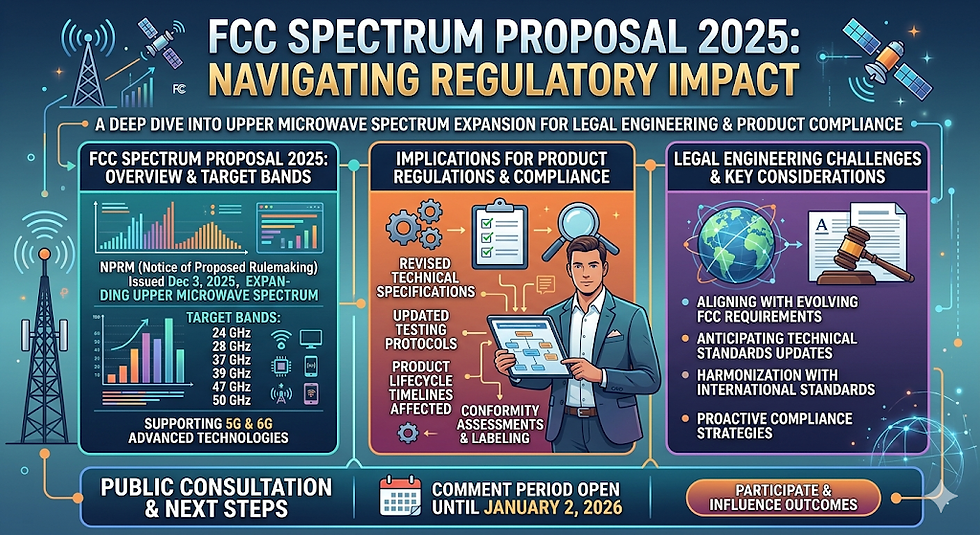
The FCC spectrum proposal 2025 targets several high-frequency bands, including 24 GHz, 28 GHz, upper 37 GHz, 39 GHz, 47 GHz, and 50 GHz. These bands are essential for enabling high-capacity wireless communications and supporting advanced technologies such as 5G and future 6G systems.
From a legal engineering perspective, this proposal introduces important considerations for product design and regulatory compliance. Manufacturers of radiofrequency devices must anticipate potential updates to technical standards, licensing frameworks, and interference management rules. Compliance strategies will need to align with evolving FCC requirements to ensure that products meet certification standards and can be lawfully marketed in the United States.
Implications for Product Regulations and Compliance
The NPRM may lead to revised technical specifications and testing protocols for devices operating within the identified frequency bands. Companies involved in the development of telecommunications equipment should monitor the rulemaking process closely, as changes could affect product lifecycle timelines, conformity assessments, and labeling obligations.
Legal engineers must also evaluate how these regulatory developments intersect with international standards, particularly for companies operating in multiple jurisdictions. Harmonization challenges may arise, requiring coordinated compliance strategies across different regulatory regimes.
Public Consultation and Next Steps
The FCC has opened a public comment period, allowing stakeholders to provide input on the proposed measures until January 2, 2026. Participation in this process is critical for organizations seeking to influence regulatory outcomes or anticipate future compliance requirements.
Conclusion
The FCC’s initiative represents a significant step toward enhancing spectrum efficiency and supporting next-generation wireless technologies. For professionals in legal engineering, the proposal underscores the importance of proactive regulatory analysis and strategic planning to ensure product compliance in an evolving legal landscape.
